Orthotics & Foot care

HYPE VS REALITY: THICK AND FOAMY SOLES ARE NOT FOR EVERYONE
FIND OUT WHY LATEST ISN'T GREATEST IN THE WORLD OF RUNNING SHOES
Why wearing your running shoes when you are not running can be bad for you?
Buying shoes was already a tough task. But with the number of patients unsatisfied with the updates of their favourite models, and with the amount of unnecessary injury we observe in clinic, we had to dig into the subject—and we came to the following conclusions:
In 2026, wearing the latest model of your forever favourite on-road running shoes to commute, at work, or casually on the weekend is as inappropriate as doing so in a pair of ski boots!
For decades, we told patients that “if running shoes could do more (running), they could do less (long walks and long standing)”, because they were built to be challenged with heavy and repetitive strikes. Manufacturers were spending a lot on production; more elements in each layer of the shoe sole requires more production line in the factory. Then the product, once created, was marketed, followed by staff training with lots of “technologies/selling points” to explain to customers what the shoe could do for them.
Up to three years ago, “running shoes” were an easy recommendation for those long days standing at work or at the museum, for city trips and long walks, or to make ageing or worn-down joints feel better. Running shoes were built with comfort and support in mind. They were stable and durable.
Lately, the marketing stories seem to be written before the product is manufactured or even designed—telling us to run on air, on clouds, to say goodbye to gravity; not to run, but fly…
The secret sauce? Some cutting-edge innovations and featherlight materials.
Can these new super-light trainers still support everyone’s weight when running and applying up to three times your body weight landing on one foot at a time?
Can they be worn every day and be used to run with?
Wearing an old pair of running shoes to commute was already a good source of injury. But now, wearing these new shoes daily seems to be even more dangerous for your body.

What’s wrong with those new makes?
In a pair of shoes, the support weight.
If you shape and structure a sole with hard bits, you create a skeleton that doesn’t let the foot sinking into the sole of the shoe when running, which increases the weight of the footwear.
I had the chance to work alongside a Research and Development (R&D) team to see how a pair of shoes was previously—and is now—manufactured, questioning whether the biggest part of investment was allocated to making or marketing these new on-road running shoes.
To blow up a shoe sole with gas doesn’t require many production lines. Thickening foam makes the shoes more robust but increases the stack (distance between foot and floor), which reduces joint stability from your toes to your neck.
Running shoes were designed to move forward with some viscous cushion under the heel and some elastic cushion under the toes.
Landing, support & stability, then propulsion were the three main areas to work on, in a sole of the shoe for a R&D team.
But with the latest road running shoes, most brands focuses so much on the propulsion, that they are forgetting the importance of the transversal foot support and heel/ankle stability.
Those latest models also deteriorate much faster, I’d say in 5/6 months, versus 9/12months in the past.
If you wear custom orthotics, you’ll notice that the arch support can feel more lumpy, the orthotics can be less effective, and wear out quicker. Because they end up sinking into the shoe sole rather than nicely flexing under your foot sole when they lie on a reinforced shoe.
In short:
- The latest on-road running shoes are designed to be light and bouncy, to increase the energy return and to break your Personal Best Time (PB) but this makes them less stable, less durable. Those are built to only run with.
- Those new /magic foams (Freshfoam, Nitrogen injected…) could also be tested after a few months of running.
Because your running shoes will be challenged, over time by
1. the environment (water, heat, cold…)
2. by yourself (body weight, running style, maintenance…)
I read recently that “judging a shoe on its first runs, would be like judging a marriage right at the end of a honeymoon…” and I could not agree more!
What other choices have you got?
For everyday
If you like to wear trainers daily, some classic models remain excellent without looking too sporty.
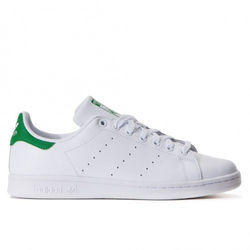
Nike Air Max, Air Force 1, Jordan, New Balance 990/992/993, Adidas Stan Smith, Reebok Classic Ex-O-Fit.
These designs have been around for decades and remain as reliable as a BIC pen. They’re suitable for commuting, to spend long days on your feet, and they work well with orthotics.
 |  |  |
|---|
For everyday + on-road running / jogging
For those returning to exercise, recovering from injury, or following a treatment plan with orthotics, some re-released older performance models offer a great balance.
Models like the Nike Vomero 5, ASICS Gel Cumulus 16, Nimbus 10.1, and Kayano 14 are based on designs from 2008–2014—an era when shoes were built with more stability and durability.
Today, I would recommend these over newer versions (Vomero 18, Gel-Cumulus 28, Nimbus 27, Kayano 32) for people wanting a shoe that works both casually and for running.
 |  |  |
|---|
For even more stability
At PODO, we’ve always said: you can run in tennis shoes, but you cannot play tennis in running shoes.
Today, that statement matters more than ever. Tennis shoes offer excellent structure and durability, making them a better option for daily wear than modern running shoes.
We often see strong results when patients wear sturdy tennis shoes with orthotics. Their inherent support complements the custom support we aim to provide with insoles.
 |  |
|---|
How did we get here?
From 20 years in the running industry, a few patterns stand out:
-
What goes out of fashion is fashionable
-
Trends last around five years
-
More storytelling often means higher prices
-
Fewer production steps increase margins
-
Lighter products generate more buzz
-
Softer soles improve first impressions
-
Less durable products drive repeat sales
Since COVID, most our patients spend more time in trainers. As a consequence, some will spend more money on them and/or be willing to replace them frequently, while others wear shoes worn-down, out-of-shape and damaging their body with every step.
Now you are aware of the risks, we invite you to check your shoes carefully, seriously consider what you expect from your next purchase, and seek professional advice if you experienced any joints or muscles pain since changing your shoes.
Are the pros of those innovations… just for the Pro?
What Adidas has achieved on the last LCS Marathon is just unbelievable.
Making of the ‘Sunday 26th April 2026’ a date to remember.
Releasing the ADIZERO ADIOS PRO EVO 3, their first on-road Racing Running shoe sub-100 grams and The lightest-ever race-legal model in the industry and assisting:
- Sabastian Sawe setting a new world record of 1:59.30 in a competitive event.
- Tigst Assefa setting a women’s-only world record of 2:15.41.
- Yomif Kejelcha running 1:59.41 in his debut marathon.
Thumbs up Adidas, your R&D team just took the lead in their competition.
But... when you’ll read on the Adidas website that this $500 pair of shoes is a “must-have“ if you chase a PB, please remember that having a driving licence is not enough to enjoy the 360 degrees benefits of a formula one.
Chasing a PB is not enough to be able to enjoy the responsiveness of this product.
There is the elite level where shoes are rotated, checked, replaced for free, and there is the consumer level where racing shoes are an investments. At least with the Adizero Adios Pro Evo 3, Adidas made it clear, its longevity goes from 0 to 26 miles.
Finally, our fitness level and the quality of your training must be great to cope with the lack of support of such a shoe challenged by the activity of running. Let’s just keep in mind that there is as much support and stability in a 97g pair of racing shoes (9.5 size) than there is cushioning in a pair of cycling shoes. Close to none.
Our question to Brands:
Should we continue pursuing greater energy return in developing shoes designed for everyday runners - those who run to clear their minds but only occasionally enter races and rarely mind their PB?